Here's what nobody tells you about coming back to pleasure
Years of avoidance don't vanish the moment you decide you're ready. Your nervous system doesn't just flip a switch. Your brain, your body, your sense of what's safe and what isn't—all of it is calibrated for safety-through-distance. Rewriting that takes intention, the right tools, and honestly, a lot of patience with yourself.
I work with people every week who've spent five, ten, sometimes twenty years stepping away from pleasure. The reasons vary wildly: religious upbringing, trauma, medical events, a relationship that made sex feel unsafe, depression that flattened everything. But the landing place is always the same. There's a part of you that wants to reconnect. And there's another part that's terrified.
Why lemon vibrators work differently for people rebuilding pleasure
Let me be specific. When you've been away from your body for a long time, intense vibrations can feel like sensory shock. A powerful internal vibrator or a rumbly wand can be overwhelming—too much, too fast, too direct. You need to relearn what pleasure even feels like before you add noise and intensity to the equation.
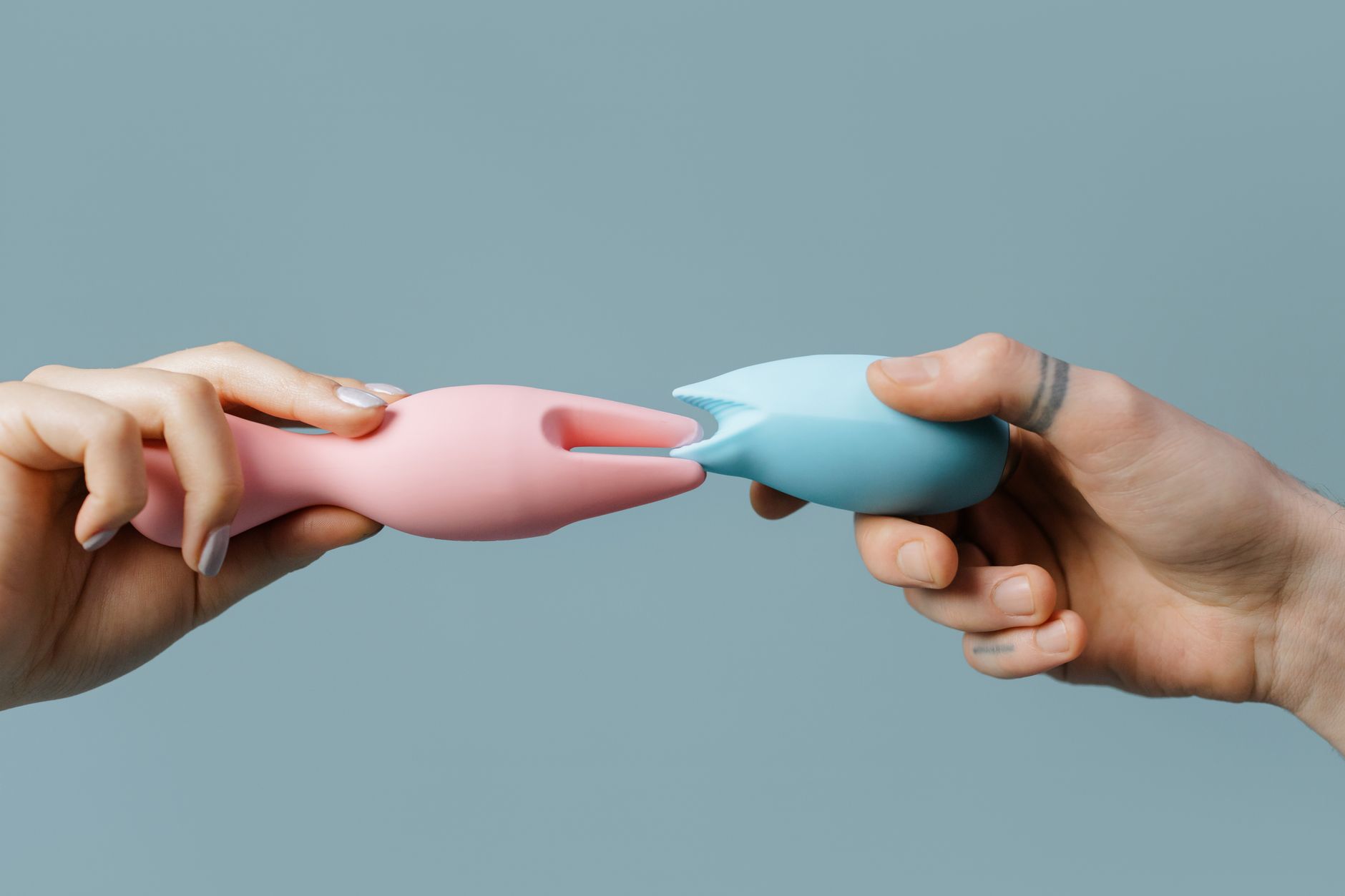
Lemon clitoral vibrators, particularly The Lem, sit in a totally different category. They use suction and pulsing rather than traditional vibration. That matters because suction feels gentler on the surface. It's rhythmic without being jarring. It builds sensation gradually instead of blasting it at you. For someone whose nervous system is learning that pleasure is safe again, that difference is enormous.
The suction mechanism also means you're working with the body's natural response rather than against it. There's less friction, less potential for irritation, less chance of that overwhelmed feeling that sends people right back into avoidance. You get pleasure that feels nurturing instead of demanding.
The psychology of "safe" sensation
When you've avoided pleasure for years, your brain has learned something specific: my body is not a place where good things happen to me. That's not shame. That's just how the nervous system works. It's being protective. Changing that belief requires evidence. Small, repeated, safe evidence that pleasure can happen to you without danger, without pressure, without consequence.
A lemon vibrator is gentle enough to feel like exploration rather than performance. You're not trying to achieve anything. You're not racing toward an orgasm that might not come. You're just noticing sensation. That's the whole point early on. This is the thinking I bring to my clients: pleasure isn't a destination. It's data.
Starting over: a practical framework
Week one is about presence, not outcome. Set a time when you won't be interrupted. Anywhere from five to fifteen minutes. Charge The Lem beforehand. Use it on the lowest setting. This week, the goal is noticing. Does this feel good? Neutral? Weird? All three are fine answers. You're collecting information, not proving anything.
Weeks two and three, you're noticing patterns. Do certain times of day feel better? Does your body respond differently if you've had coffee, or if you're more relaxed? Are there textures or pressures that feel better than others? You're becoming a scientist of your own pleasure. That's genuinely how you rebuild trust in your body.
Week four and beyond, intensity becomes an option, not a demand. If you want to try pattern two or three on your lemon vibrator, you can. If you want to stay with one, that's equally valid. The framework here is consent, not progress. You're training your brain that you get to decide what happens to your body. That's the actual healing.
The role of lubrication and comfort
When you've been away from pleasure, tissues can feel drier. That's not failure. That's just what happens when the body isn't regularly getting signals that pleasure is coming. Water-based lubricant makes a massive difference here. Not because you're broken, but because it removes friction as a variable. Less friction means you can focus purely on sensation without any discomfort getting in the way.
I recommend quality water-based lube with your lemon vibrator. It makes the whole experience feel more luxurious, less clinical. And honestly, the ritual of using it—taking care of yourself before pleasure—is part of the rewiring. You're literally showing your body that you believe it deserves good things.
When fear shows up (it will, and that's okay)
About halfway through, a lot of people hit a wall. Something in the experience—maybe the sensation, maybe just the emotion of reconnecting—triggers anxiety. Your brain goes, "Wait, are we really doing this?" and suddenly you feel resistant.
This is not a sign that you're broken or that this approach isn't working. It's actually evidence that you're moving through something real. Your nervous system is updating its beliefs. That takes courage and it creates discomfort. The trick is not to push through it, but to pause. Let yourself feel it. Notice it without judgment. Then decide: do I want to try again in five minutes, or do I want to stop for today?
Your job is not to achieve pleasure on a timeline. Your job is to prove to your nervous system that you're safe. That's the whole foundation. Everything else builds from there.
Rebuilding with a partner, if that's part of your story
If you have a partner and you're working through this together, one rule matters: separate the conversations. "I'm exploring my own pleasure" is different from "I want us to be intimate." Conflating them turns both conversations into a source of pressure.
Let your partner know what you're doing. You don't need to give a play-by-play. But "I'm working through some things with my own body" sets a boundary and manages expectations. Then, when and if you want to involve your partner, that becomes a separate conversation with its own timeline. No pressure. No score-keeping.
Common questions as you're moving through this
A lot of people wonder if they "should" be feeling more by now. Pleasure isn't linear. Some days your body will respond immediately. Other days, nothing will land. Both are normal. You're rewiring years of conditioning. That takes time.
Other people worry that using a lemon vibrator means they "need" it to feel pleasure. That's backwards thinking. Right now, a gentle tool helps your nervous system learn that sensation is safe. As your relationship with pleasure rebuilds, you might find you need it less, or you might find you love it and want to keep using it. Neither outcome means anything about your sexual health.
FAQ: Rebuilding pleasure after avoidance
How long does it typically take to feel comfortable with solo pleasure again?
There's no standard timeline, but most people report noticeable shifts in comfort within three to four weeks of consistent, pressure-free exploration. That said, comfort is not the same as desire or sensation. Some people reconnect with sensation quickly but take longer to feel emotionally safe. Others need months. The metric that matters is your own sense of ease, not anyone else's schedule.
Is it normal to feel nothing the first few times I use a lemon vibrator?
Completely normal. If you've spent years away from your body, the neural pathways for pleasure aren't as active. It's like a muscle that hasn't been used. Your body is literally relearning how to respond. Sensation often comes after comfort. Don't chase it. Let it arrive on its own schedule.
What if I feel guilty or ashamed while I'm exploring?
That guilt is often old messaging, not present truth. You're an adult. Your body deserves care and attention. When shame shows up, pause and ask: whose voice is this? Is this actually my belief, or am I carrying someone else's fear? Naming it often weakens its grip. If the shame is attached to trauma, a therapist who specializes in sexual healing can be invaluable.
Can I use a lemon clitoral vibrator if I'm on antidepressants or other medications?
Most medications that affect sensation or arousal won't prevent you from using a lemon vibrator, but they might change what you feel. Be patient with your body. If you're on SSRIs or other drugs that flatten sensation, a gentle approach with a tool like The Lem—which doesn't require the same level of baseline sensation as other toys—can actually be helpful. Talk to your doctor if you're worried about interactions, but there are no contraindications with the device itself.
What if my partner wants to be involved but I'm not ready?
Your readiness is the only metric. Tell your partner: "I'm working through something with myself right now. I'll let you know when I want to involve you." If they push, that's information about whether they respect your boundaries. Healthy partners can wait. They can also ask what would help them feel connected while you're doing this work. But they don't get to rush your timeline.
How do I know if I'm progressing, or just going through the motions?
Progression isn't about achieving bigger orgasms or needing more intensity. It's about noticing that you think about pleasure differently. That you're less afraid. That you can touch yourself without immediately feeling shame or resistance. That you're curious instead of obligated. Those are the real wins.
The long game
Rebonding with pleasure after years of avoidance is one of the most underestimated forms of healing. You're not just reclaiming a physical experience. You're rewriting your relationship with your own body. You're proving to yourself that you deserve to feel good. That your pleasure matters.
Lemon vibrators work well for this because they meet you where you are: gentle, non-demanding, easy to control. You're in charge. You set the pace. And gradually, week by week, your nervous system learns what a lot of people take for granted—that your body is a source of joy, not just obligation or shame.
If you're ready to explore and want guidance tailored to your specific situation, reach out. This work doesn't need to be done alone.