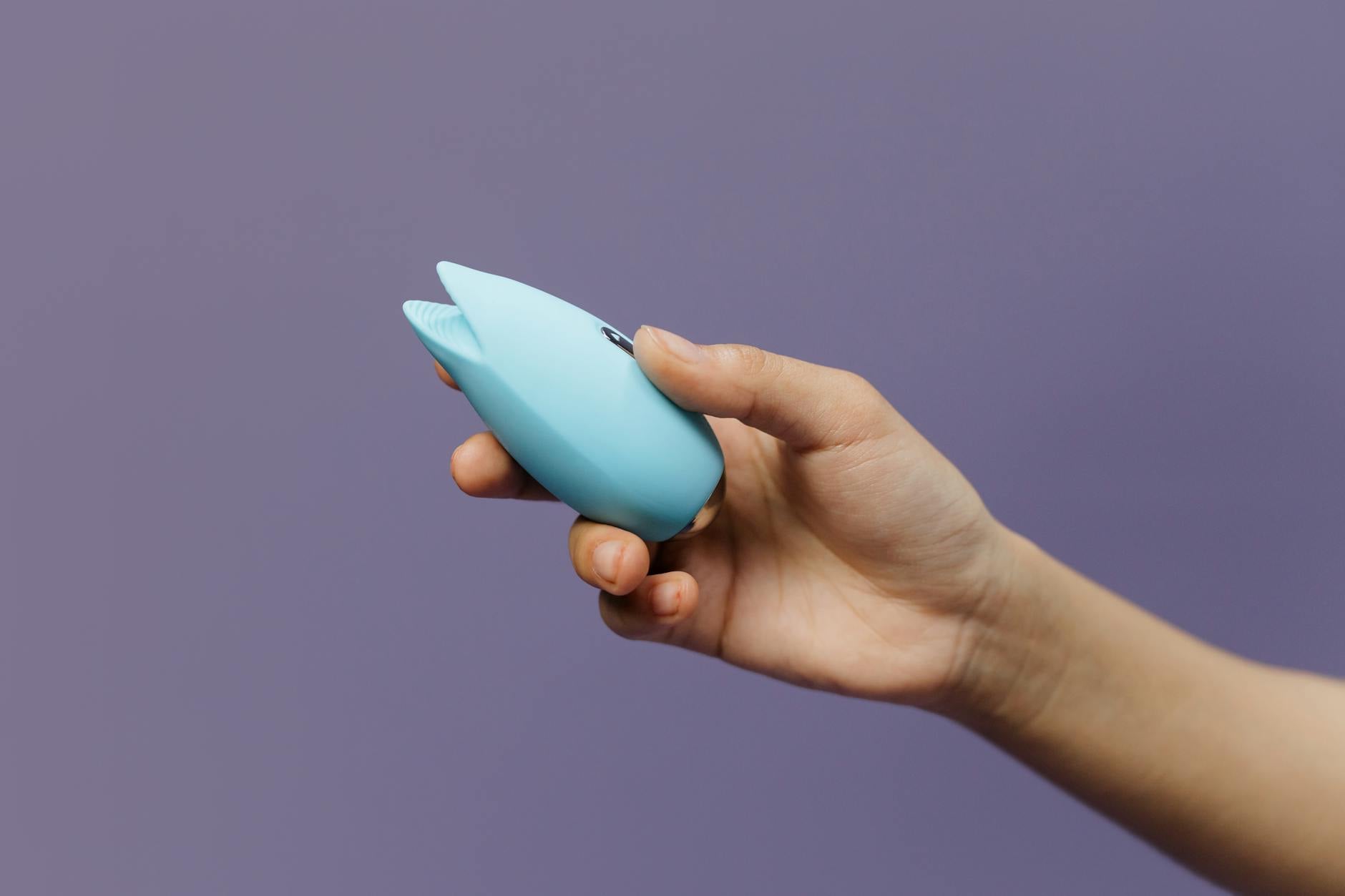
Here's the thing about performance anxiety
Performance anxiety isn't really about performance. It's about your brain hijacking your nervous system because it's convinced something bad will happen if you mess up. Your cortisol spikes. Your blood vessels constrict. Your pelvic floor tightens so much it becomes almost impossible to feel pleasure. The harder you try to relax, the more tense you get. It's a feedback loop that turns touching yourself into a test you're failing in real time.
The paradox is that lemon vibrators actually work better when anxiety is high, not worse. Not because they're magical, but because of how they interrupt that loop.
Why your nervous system shuts down sensation
When you're anxious about performance, your body enters a low-level fight-or-flight state. This means blood flow redirects away from the clitoral tissue and toward your major muscles. Your pelvic floor (which should be relaxed) tightens to protect you. Your brain becomes hypervigilant, scanning for signs that you're "doing it wrong," which means you're not actually present for what's happening.
This is different from the arousal state you need. Real arousal is a parasympathetic response. It requires your nervous system to believe you're safe. If you're thinking "Is this working yet?" or "Should I be having an orgasm by now?" you're still in threat mode. Nothing good happens there.
The reason external devices like lemon clitoral vibrators bypass some of this is neurological. They provide consistent, targeted stimulation that doesn't require you to generate it yourself. That small permission slip—"I don't have to perform the touch, just receive it"—is often enough to downshift your nervous system a notch.
The pressure paradox
Here's what I see clinically: people with high performance anxiety often report that lemon vibrators feel more intense than they'd expect, not because the vibrations are stronger, but because they're experiencing sensation without the self-editing voice running commentary. When you're not generating the stimulation yourself, you can't blame yourself for it not "working." That removes a massive layer of cognitive load.
The second shift is directness. A lemon sucker or clitoral vibrator doesn't require you to guide it, angle it, or modulate pressure with your hand. Once it's in place, your job is literally just to receive. For anxious people, that constraint is liberating. There's nowhere to hide and nothing to fix.
Why sensation feels blocked under pressure
Performance anxiety creates what therapists call "spectatoring." You're watching yourself have sex instead of being in your body having sex. With lemon vibrators, spectatoring is harder to maintain because the sensation is just happening to you. You can't narrate your way out of it.
That said, the vibrator alone won't fix anxiety. If you're in a state of high activation, even a lemon clitoral vibrator might feel numbing or too much because your nervous system is in protection mode. The tool is the second part of the solution, not the first.
What actually needs to happen first
Before you pick up any lemon sexual toys, your nervous system needs to know it's safe. This sounds abstract but it's physical.
Three practical things that work:
1. Breathwork comes before stimulation. Spend 5 to 10 minutes on slow breathing before you even think about touching yourself. Box breathing (four counts in, hold four, out four, hold four) is strong because it directly activates the parasympathetic nervous system. Your body believes you're safe when your breath is slow. Vibrators won't help if your nervous system is still in code red.
2. Remove the performance metric. Tell yourself in advance that there's no outcome you're aiming for. No orgasm required. No particular sensation required. You're just exploring what feels okay right now. When you remove the finish line, the pressure valve releases.
3. Start with something solo. If you're anxious about performance with a partner, practicing alone with lemon vibrators first removes the witness. That matters. It's hard to relax when you're worried about someone else's expectations.
How to actually use a lemon vibrator when anxiety is high
Once your nervous system is a bit calmer, here's the sequence that works.
Start at a low pattern on your lemon clitoral vibrator. The Lem's lower intensities (patterns 1-3) are designed for exactly this. They give you sensation without overwhelming an already-activated nervous system. Your job is not to chase intensity. It's to notice. "What does this feel like?" not "Why isn't this working?"
Keep your eyes open if possible. Sounds odd, but closing your eyes when you're already anxious can increase internal narration. Looking at your body, the device, anything external keeps you grounded in what's actually happening, not what you're afraid might not happen.
If you feel tension building rather than pleasure building, stop. Let your pelvic floor relax for 30 seconds. Breathe. You're not failing. You're just noticing that your nervous system isn't ready yet. That's information.
Why the suction action matters under pressure
Lemon vibrators with a suction mechanism (like The Lem) are particularly helpful for anxious bodies because the sensation bypasses some of the anticipation feedback. Instead of waiting to feel increasing intensity, you get immediate, obvious feedback. Your clitoris is literally being drawn toward the device. It's undeniable.
For anxious people, that undeniability is grounding. You can't argue with a sensation that's that direct. It interrupts the "is this even working?" spiral.
The reframing that actually helps
Performance anxiety usually means you believe you're responsible for your own pleasure and also that pleasure must follow a specific progression to "count." Both beliefs are wrong and both are exhausting.
You're not responsible for generating pleasure from nothing. Your body's job is to respond to stimulation. Your job is to receive it. A lemon clitoral vibrator is not a performance. It's not a test. It's a tool. Using it means you've already removed the performance aspect. You're just here for sensation.
This matters for partnered situations too. If you're anxious during sex with a partner, one conversation might be: "I want to use a device to help my body relax, not because anything's wrong, but because my nervous system needs that permission." That's not a reflection on your partner. It's a statement about your own wiring.
When to bring a partner into the conversation
If your performance anxiety is tied to a specific relationship dynamic, the lemon vibrator isn't the whole fix. It helps, but the real work is talking to your partner about what you need.
Honestly? Many partners are relieved when their partner brings a clitoral vibrator into the picture. It removes pressure from them to be the sole source of your pleasure. Everyone's system relaxes.
Bring it up when you're not trying to be intimate. "I've been thinking about using a lemon vibrator because I notice I get in my head during sex. It's not about you. It's about me learning to stay present." Most partners understand that better than you'd expect.
The real shift
Lemon vibrators don't fix performance anxiety. Nothing fixes it except your nervous system deciding it's safe to let go. But they do remove one major variable from the equation: the pressure to manually generate sensation while also receiving it while also monitoring whether it's "working" while also worrying about whether your partner is bored.
That's a lot of cognitive bandwidth. A lemon sexual toy frees up about 60% of that load. The other 40% requires the reframing. The breathing. The permission to just be in your body without judgment.
Start there. The device is the smaller piece.