
Let's be real about hormonal IUDs and desire
A hormonal IUD is working exactly as designed when it tanks your libido. The device releases synthetic progestin directly into your bloodstream to stop ovulation and thicken cervical mucus, which means it's also quietly rewiring your brain's relationship with desire. That's not a bug. That's the feature.
But here's what nobody tells you: low desire and low capacity for pleasure are not the same thing. One is neurochemical. The other is mechanical. A lemon vibrator works on the mechanical level, which means it can restore sensation and orgasm even when desire has completely vanished. And that distinction is worth knowing.
Why your IUD crushed your libido
Hormonal IUDs release progestin, which suppresses estrogen and lowers testosterone. Testosterone is the hormone that drives sexual desire in everyone, regardless of sex. When it drops, interest in sex drops too. Some people lose it entirely. Others lose it partially but notice the motivation to initiate is gone, even if they still respond once they're engaged.
This is so common that it barely registers as a "side effect" anymore. IUD manufacturers list it in the small print. Your doctor probably mentioned it casually. And then you installed it in your uterus and watched your sex drive evaporate like it never existed.
The cruel part is this: your body can still feel good. Your nerves still work. Your clitoris is still there, still dense with sensation. But your brain has stopped sending the signal to care about activating it.
How sensation actually changes (and what stays intact)
With an IUD, you might notice:
Arousal takes longer to build, if it builds at all. Where you used to feel a spark of interest, now you feel nothing. The anticipatory pleasure that used to cascade through your body doesn't happen.
Orgasms feel less urgent. The build toward climax feels flatter, less magnetic. The release, when it comes, is less intense.
Your threshold for initial touch is higher. Light stimulation that used to feel delicious now feels neutral. You need more direct, focused pressure to register sensation at all.
What doesn't change: your clitoris still has roughly 8,000 nerve endings. Your capacity to orgasm remains intact. Your pelvic floor still responds. Your brain's pleasure centers are still functional, they're just not getting the chemical signal to wake up.
This is where a lemon vibrator changes everything. Because lemon clitoral vibrators don't care about your desire. They just provide the direct, concentrated stimulation your body needs to register sensation and build toward orgasm without waiting for motivation to show up first.
Why lemon clitoral vibrators work differently when desire is absent
A standard vibrator creates broad, diffuse stimulation. It's lovely when you're already aroused, when your body is primed and sensitive. But when desire is flat, diffuse stimulation often feels like nothing at all. You need something that cuts through the neurochemical fog.
Lemon vibrators, particularly models with suction or pulse technology, concentrate stimulation into a precise zone. They don't ask your brain for permission. They just apply sustained pressure to the exact spot where sensation is most concentrated, and your body's reflex arc takes over.
Many people with IUDs who've tried different vibrators report the same thing: traditional wands feel like background noise. Lemon clitoral vibrators feel like something is actually happening.
The practical shift you need to make
Here's what changes when desire is absent:
Arousal is now a choice, not a feeling. You have to decide to engage, not wait to feel like it. Set aside 20 minutes, get into a comfortable position, and start stimulation. Foreplay won't help you here because you're not building toward anything, you're creating it.
You need permission to be selfish about sensation. Without the desire drive, it's easy to feel like solo pleasure is pointless. It's not. Orgasm releases endorphins, increases blood flow, and maintains your sexual response capacity. You're not broken, you're maintaining equipment.
Start with pattern 1, stay with pattern 1. Don't assume you need to escalate intensity because you're not feeling much initially. Your nervous system is quieter right now. Patience and repetition matter more than sensation-seeking.
Lube is non-negotiable. Testosterone also affects vaginal lubrication and tissue elasticity. Add a water-based lubricant, even if you don't think you need it. Your tissues will thank you.
When to consider other options
If you've been using a lemon vibrator consistently for six weeks and feeling absolutely nothing, pain appears, or your body feels numb despite stimulation, that's different. Some people's bodies respond well to an IUD's hormonal profile. Others don't. If you're in the group where desire and sensation have completely flatlined, it might be worth asking your provider:
Could we try a copper IUD instead? (No hormones, no libido impact, different side effect profile.)
Could we try a different progestin dose? (Some IUDs release higher or lower amounts.)
Is testosterone therapy worth discussing? (It's uncommon but possible, particularly in the UK and Australia.)
You don't have to accept complete loss of desire as the price of birth control. But you also don't have to wait for motivation to return to reclaim pleasure.
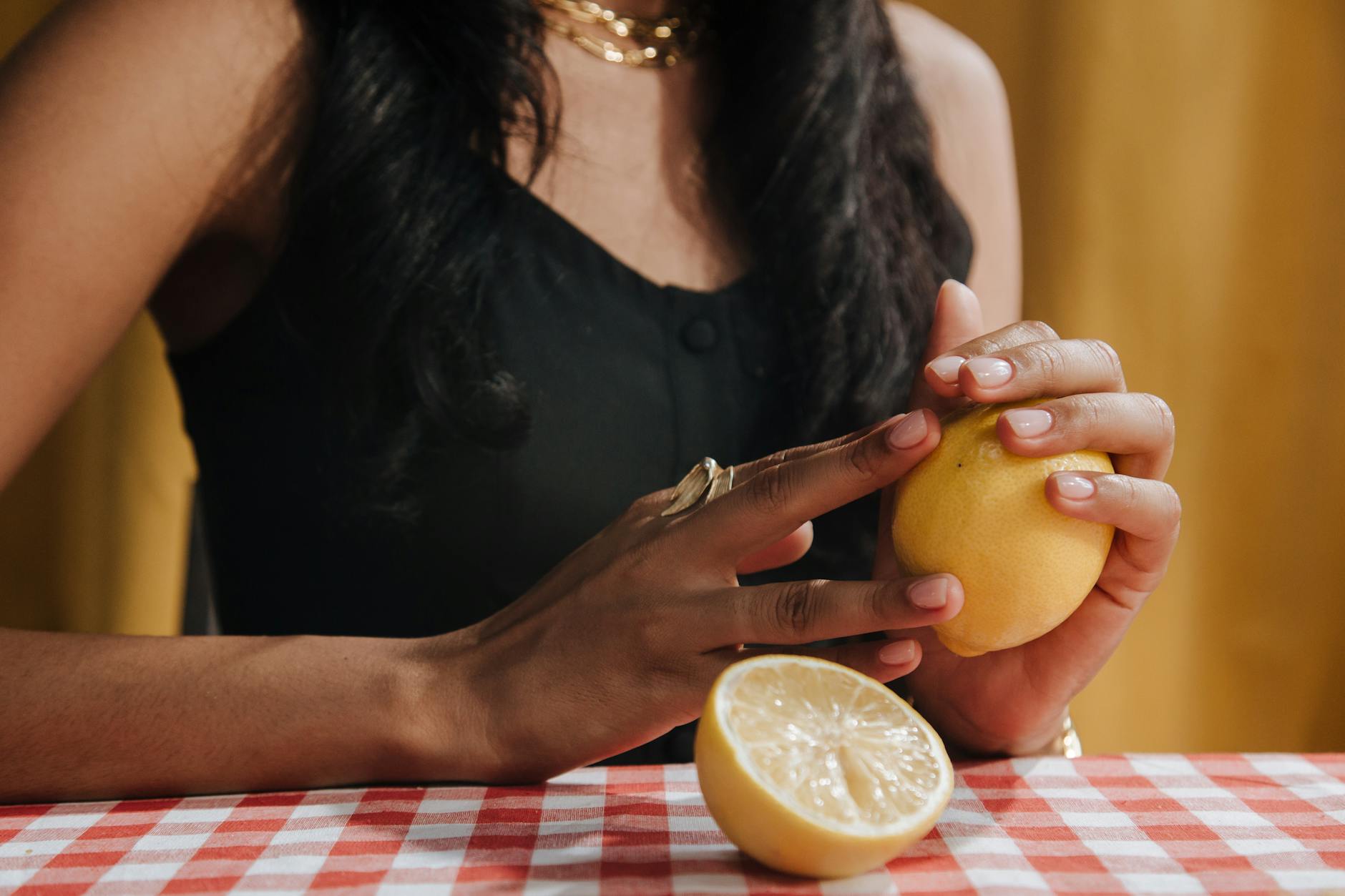
Photo by Ron Lach on Pexels
How to rebuild sensation over time
Low libido from hormonal IUDs often shifts after 6-12 months as your body acclimates. But you don't have to white-knuckle through months of sexual numbness waiting for that to happen.
Use a lemon vibrator once or twice weekly, even when you don't feel like it. Track what you notice. Does sensation feel slightly stronger on day 10 of your cycle versus day 25? Do certain patterns feel different than others? Does lube change anything? Your body is sending data. You're just not used to reading it when desire is offline.
Many people find that regular orgasms actually accelerate the return of desire. There's a neurochemical loop where pleasure begets more sensitivity, which eventually rekindles interest. But that loop doesn't start on its own when your IUD is suppressing the initial signal. You have to kick it off manually.
Solo pleasure isn't a consolation prize when partnered sex feels pointless. It's the tool that keeps your nervous system engaged and reminds your body that sensation exists, even when motivation is AWOL.
Talking to your partner about this shift
If you have a partner, the worst thing you can do is pretend nothing has changed and then avoid sex indefinitely. Your partner will feel rejected. You'll feel resentful. Both of you will assume the problem is relational when it's actually pharmaceutical.
Instead: "My IUD tanked my desire, not my capacity. I'm going to engage with this solo first so I'm not performing. When I rebuild some sensation, we can talk about what sex looks like for us."
This reframes the whole situation from "I don't want you" to "I'm managing my body."
Then, when you do want to be intimate, you're coming from a place of reclaimed pleasure, not obligation. That changes everything.
People also ask
How long does it take for a hormonal IUD to stop killing your libido?
It varies wildly. Some people regain desire within 3-6 months as their body acclimates. Others take 12+ months. Some never fully recover and eventually switch to a copper IUD. There's no standard timeline. If it's been a year and you're still experiencing zero desire, that's worth discussing with your provider.
Can you use a lemon vibrator right after IUD insertion?
Yait's safe to use most vibrators after your IUD is fully seated (usually 2-4 weeks post-insertion). But insert slowly and gently for the first month or two. Your cervix and uterus are still adjusting. Start with low patterns and listen to your body. If anything feels off, pause and check in with your doctor.
Does a lemon vibrator help if you have no desire and no sensation?
Yes, often. Because desire and sensation are separate systems. A lemon clitoral vibrator provides external stimulation that your reflex nervous system can respond to, even when your brain's desire pathway is offline. You might not feel motivated to use it, but once you do, your body often responds.
Will using a lemon vibrator bring back my libido?
Not directly. But regular orgasms can help reset your nervous system and eventually rekindle desire. Think of it as priming the pump. You're not waiting for motivation, you're creating the physical experience that sometimes rekindles interest over time.
Is low libido from an IUD permanent?
Not always. Many people experience gradual return of desire over months as their body adjusts. Others find the suppression continues for as long as the IUD is in. If it's been a year and nothing has changed, you have options: switching devices, trying testosterone therapy, or exploring whether a different method of contraception works better for your body.
Should I remove my IUD if my libido is gone?
That's between you and your provider. An IUD is often the best contraception option available, and low libido is manageable with the right tools and time. But if the sexual side effects are severe enough that they're tanking your quality of life and relationship, and you've waited long enough for adjustment, removal is absolutely a valid choice. Your pleasure and autonomy matter.
The bottom line
Your hormonal IUD was designed to suppress ovulation, which it does by suppressing desire as a side effect. That's frustrating and real, and you're not being dramatic if it's affecting your life. But suppressed desire doesn't mean suppressed capacity for pleasure. A lemon vibrator works on the mechanical level, bypassing the neurochemical signals your IUD is muffling. You can restore sensation, rebuild your sexual response, and reclaim pleasure on your own terms, even if motivation is months away. Your body deserves that. Your pleasure matters, with or without desire.
If you're navigating this shift, we're here. Start with solo pleasure on your own timeline, not because you should, but because you can. Contact us if you want to talk through what might work best for your body and your IUD.