
When pleasure gets put away
Something happened. Maybe years ago, maybe recently. You stopped touching yourself. You stopped asking for it. You stopped thinking about it in the way you used to. Avoidance doesn't always feel like a choice at the time. It feels like your body just... stopped wanting. It feels like that part of you went quiet and stayed quiet.
Now you're wondering if you can get it back. And honestly, that impulse matters more than you know.
Reawakening pleasure after a long pause is not about intensity or performance. It's about permission, curiosity, and tools that meet your body where it actually is right now. Lemon vibrators like The Lem Toy are designed for exactly this: gentle, responsive stimulation that doesn't demand anything from you.
Why avoidance happens (and why it's not character)
Let's skip the guilt. Years of avoiding pleasure rarely happens because you're lazy or broken. It happens for reasons. Depression flattens desire. Relationship conflict makes touching yourself feel like betrayal. Trauma narrows the body down to survival mode. Medical stuff. Medication side effects. Burnout so complete that your nervous system just switches off sensation to protect itself.
The brain does this to keep you safe. It's not a bug. It's a feature that happened to stay on too long.
When you've been in that protective state for months or years, your body actually changes. The nerve pathways for pleasure get quiet. The pelvic floor tenses. Arousal takes longer to build, or doesn't build the same way it used to. This is neuroplasticity working exactly as designed. Your nervous system adapted to the avoidance. Now it needs to re-adapt.
That's where lemon vibrators become useful. They're not a fix. They're an external stimulus that reminds your nervous system that pleasure is possible, safe, and worth waking up for.
Why The Lem Toy and other lemon clitoral vibrators work for reawakening
Most vibrators are designed for bodies that already know how to feel pleasure quickly. They start high. They stay intense. They demand a nervous system that's already in the game.
Lemon vibrators work differently. The Lem uses suction and gentle pulsing instead of raw vibration. That distinction matters for someone reawakening. Suction creates a kind of sustained pressure that doesn't jar. It's almost meditative. You're not chasing intensity. You're building sensation gradually, from a lower baseline.
Here's the practical part: on the lowest patterns, a lemon clitoral vibrator creates stimulation that feels almost like a gentle invitation rather than a demand. Your body gets to say yes in its own time, without performance pressure.
Starting: permission is half the battle
Before you touch The Lem Toy or any lemon vibrator, you need one thing that's not physical: permission. Not permission from anyone else. Permission from yourself.
I say this in sessions all the time. Your nervous system will not wake up if part of you believes you don't deserve pleasure. Guilt, shame, religious conditioning, the feeling that pleasure is selfish when your partner isn't interested, the belief that you've been away too long to start again. All of that has to move first, or the tool doesn't matter.
One practice I recommend: write down three true things about why pleasure matters to you. Not "because it feels good" (though that's true). I mean the deeper part. "Because my body is mine." "Because sensation reminds me I'm alive." "Because I want to feel connected to myself again." Write them down. Read them when you're sitting with a lemon vibrator and feeling guilty.
Permission isn't permission for anyone else. It's a conversation with your own nervous system.
The first few sessions: what to expect and how to make it easier
Your first time using The Lem Toy or another lemon sexual toy after a long break will probably be strange. Not bad. Strange. Here's why:
Sensation is unfamiliar. Your body might feel numb or oversensitive. You might not orgasm. You might feel anxious even though you're alone. This is normal. Your nervous system is waking up. It takes time.
Here's how to set it up for success:
Time it right. Use The Lem Toy when you have at least 20-30 minutes with no pressure to "achieve" anything. Not rushed. Not tired. A time when you genuinely want to be alone.
Start with non-genital touch first. Before you reach for a lemon vibrator, spend five minutes touching yourself somewhere neutral. Your arm, your chest, your neck. Let your body remember what intentional touch feels like. This isn't foreplay. It's nervous system preparation.
Use the lowest pattern. The Lem Toy has five intensities. Start at level 1 or 2. Spend time there. The goal is not to move up quickly. The goal is to let your body acclimate.
Expect stops and starts. You might feel sensation for two minutes, then nothing. Then sensation again. That's your nervous system learning. Don't force it. Just pause, breathe, wait a few seconds, and try again.
Lubrication matters, even if you think you don't need it. Water-based lube is not just for people with physical dryness. It reduces friction, which means less pressure and more sustained comfort. Your returning nervous system will appreciate that.
What happens in the second and third week
Most people find that around week two or three of regular practice, something shifts. Not a massive change. A small one. Sensation builds a little faster. You feel less anxious about the strangeness. Your body starts to remember what anticipation feels like.
This is not coincidence. This is neuroplasticity. Your nervous system is literally rewiring itself toward pleasure again.
During this phase, you might still not orgasm, and that's okay. The point is not orgasm. The point is waking up the nervous system's capacity for sensation. Orgasm comes later.
Stick with the lower patterns on your lemon clitoral vibrator. Let your body set the pace. If you jump to higher intensities because you feel impatient, you might actually set yourself back. You're not rewiring an already-pleasure-responsive system. You're reawakening one that's been in sleep mode.
When you're ready to go deeper
After a few weeks, your body will start to tell you when it wants more. You'll notice you're staying with the sensation longer. The lower patterns might start to feel a bit too subtle. That's when you can experiment with level 3 or 4.
But here's the key: this should feel like your body asking, not like a goal you're chasing. If you're still feeling mostly neutral or numb, stay where you are. There's no rush. Some people take months to rebuild full sensation. That's not failure. That's exactly on schedule.
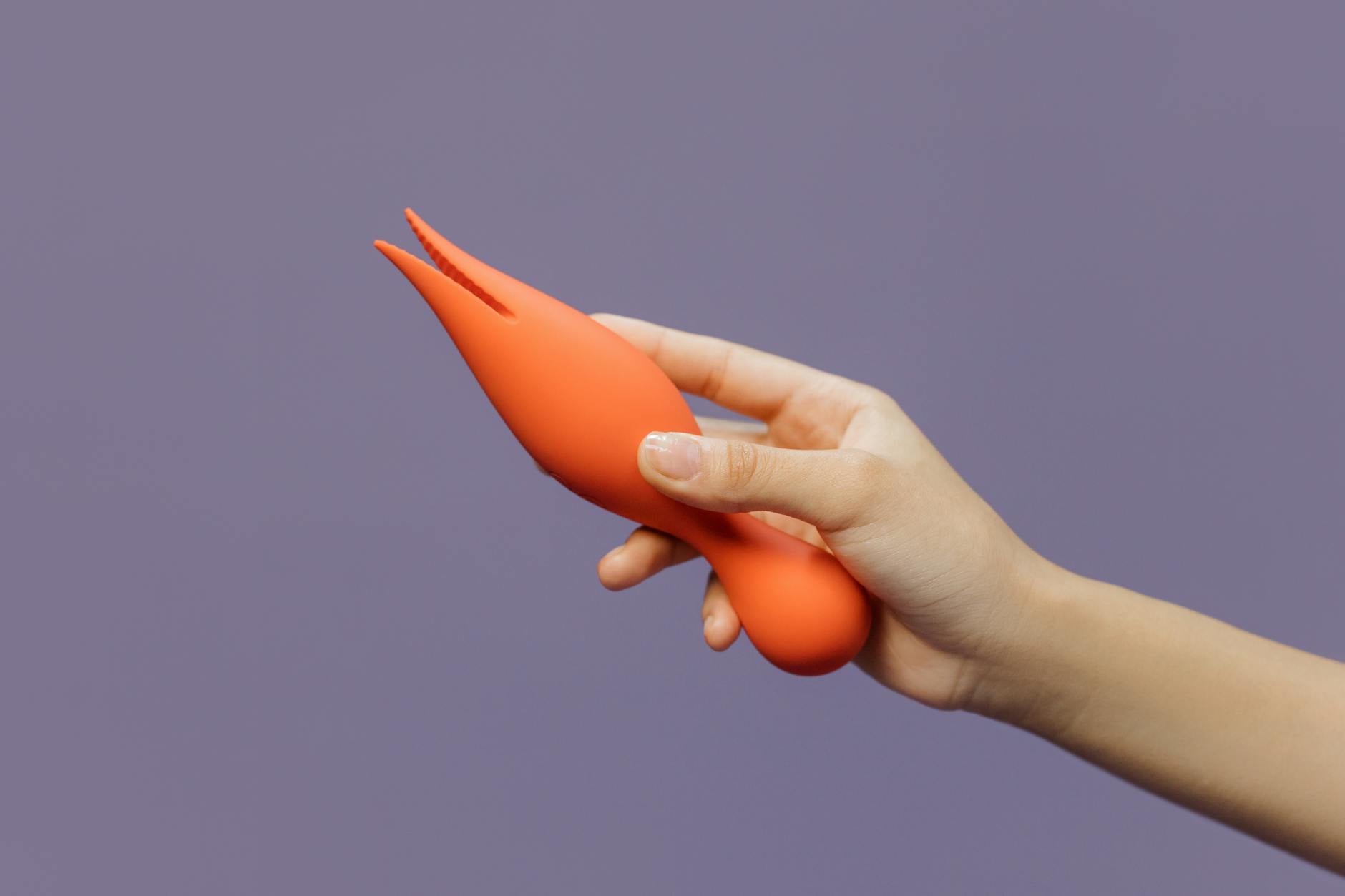
Photo by cottonbro studio on Pexels
What if it feels too intense or too numb
Two scenarios come up a lot. In the first, even the lowest pattern feels overwhelming. Your nervous system shoots into fight-or-flight. You feel panicked or dissociated.
If that's you, stop. Don't push through. Instead, try this: hold The Lem Toy in your hand and just turn it on. Don't use it yet. Let your nervous system get used to the sensation of hearing it, feeling the vibration in your palm. Do this for three or four sessions. It's desensitization. Then try applying it for literally five seconds. Stop. Try again tomorrow. Your nervous system is telling you it needs more time, and that's data.
In the second scenario, you feel almost nothing. Even at level 5, a lemon vibrator feels like barely a flutter.
This often means you're still in protection mode. Your nervous system hasn't decided it's safe to feel yet. Keep going with the lower levels, but also: could you benefit from talking to someone about what's keeping you in avoidance? Sometimes you need both. The tool and the conversation.
When to bring your partner in (if you want to)
If you're in a partnership and you want your partner to know you're reawakening, timing matters. Wait until you feel genuinely curious about it, not obligated. Wait until you've had a few successful solo sessions. This is about you first. Then it's about us.
When you do talk about it, frame it as "I'm reconnecting with my body" not "I want to fix our sex life." Those are different conversations. How to use lemon vibrators when you have a new partner is a different journey. Right now, this is about you.
The thing about long-term avoidance that nobody tells you
Once you start reawakening, you might find that pleasure comes back, but it comes back differently than it was before. You might want it less frequently. You might want different things. You might find that what used to turn you on doesn't anymore, and what bored you before now matters.
This is not regression. This is growth. Your body isn't the same. Your desires aren't the same. Your preferences aren't the same.
That's actually the point. Pleasure after avoidance isn't about returning to the past. It's about meeting yourself in the present and discovering what you actually want now.
FAQ: What people actually ask about lemon vibrators and reawakening
How long does it take to feel pleasure again after years of avoidance?
This varies widely. Some people feel a shift within two weeks. Others take three or four months. The timeline depends on how long you avoided, why you avoided, whether you're dealing with medication side effects, and your individual nervous system. The most important thing is consistency. Using a lemon vibrator twice a month won't rewire your nervous system. Using it two or three times a week likely will. Patience matters more than speed.
Can I use The Lem Toy with a partner present in the room?
Yes, but I'd suggest waiting until solo exploration feels genuinely comfortable first. Adding a witness, even a loving partner, adds a layer of performance pressure your reawakening nervous system doesn't need right now. Once you're comfortable with your own sensation and you actively want to share it, that's different. That's invitation, not obligation.
What if I orgasm right away and then feel nothing for weeks?
Orgasm is not a sign that you've "made it" or that reawakening is complete. It's just a moment of release. Some people have one early orgasm and then their body goes quiet again for a while. That's your nervous system recalibrating. Keep going. Consistency will eventually feel more stable.
Should I use a lemon clitoral vibrator alone or with my partner?
Start alone. Full stop. Your nervous system needs to associate pleasure with safety and autonomy first. Once that's solid, partnered use is a different experience entirely, and a rich one. But the foundation is solo.
What if I feel depressed or anxious using The Lem Toy?
Emotional release is real. Sometimes reconnecting with your body brings up grief or anger that's been stored there. If what comes up feels manageable, that's actually healing. Sit with it. If it feels overwhelming, talk to a therapist. You may need support beyond the tool. That's not weakness. That's wisdom.
Is there a "right" number of times per week to use a lemon vibrator?
Two to four times per week is ideal for rewiring. Enough consistency to build neurological pathways. Not so much that it becomes obligatory or exhausting. Listen to your body. Some weeks you'll want more. Some weeks less. Both are fine.
The long game
You stopped reaching for pleasure. That stopped for reasons. And now you're starting again. That's courage, whether it feels like it or not.
Lemon vibrators work not because they're magic, but because they meet your nervous system where it is. Gently. Without demand. With the consistent message that sensation, pleasure, and your own body are worth coming back to.
Start slow. Stay patient. Trust the process more than the outcome.
If you have questions about your specific situation or want to talk through what's keeping you in avoidance, reach out to us. That's what we're here for.